looking back at some of these old posts and oh, the plans I had
I was looking at some of the previous posts I’ve made here and more than a few are like, “coming up next, a 5000 word dissertation on why Kurt Russell’s butt is simply great.” I must have had the idea at some point that if I speak something into existence then I’ll actually do it. smash cut to three years later and here we are. loads of stuff that never got done.
frex, I was going to talk about Lucky McKee’s The Woman (2011) and Fresh (dir. Mimi Cave, 2022), two horror films I have wildly differing opinions on. somewhere, I have the draft of a mostly-finished piece about these movies, and I kind of remember it being pretty good. I’m not sure what I did with it, to be honest, because I wrote it while I was working at my last job and for all I know it could still be out there on that company’s servers.
just kidding. they went bankrupt. those servers are long gone.
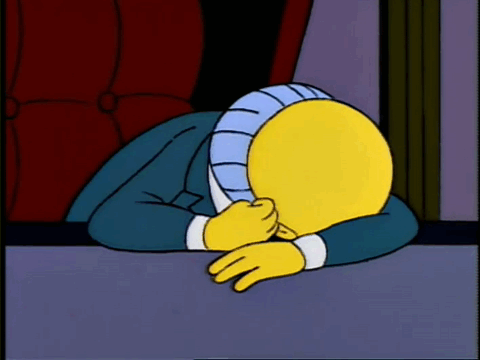
anyhow, every time I start some new venture and think “yeah, I’m going to do [NEW VENTURE] and it’s going to be so rad!,” I fall into the same trap of [NEW VENTURE] pooping out in like three to six months because I either forget all about it or I get overwhelmed and talk myself out of it.
is this a sign of ADHD?
smash cut once more to three years later and hahahahaha, holy shit, here we are AGAIN. another unfinished [NEW VENTURE] in the trash heap. I think going forward I should just shut up about doing any [NEW VENTURE] unless it’s a done deal.
hang on, guess what I just found!
The Woman (2011) / Fresh (2022)
Both The Woman (2011) and Fresh (2022) appear to be making a greater point about toxic masculinity and the treatment of women and their bodies as lesser-than, but only one does it with a modicum of grace. The Woman (dir. Lucky McKee, based on a novel by McKee and Jack Ketchum, 2011) tells the story of the Cleek family: Chris (Sean Bridgers), Belle (Angela Bettis), and their children Peggy (Lauren Ashley Carter), Brian (Zach Rand), and Darlin’ (Shyla Molhusen). Right from the start of the film, there’s no ambiguity about the family dynamic and even less so about the way Chris (and Brian) feel about women. Females, to them, are lower on the food chain, things to be used and abused in a variety of awful ways. Belle has been cowed into subservience by her husband, Peggy looks eternally frightened between cutting out of classes, and Darlin’ remains blissfully unaware of it all, benefitting mainly from being so young.
One afternoon while out hunting, Chris encounters a feral woman (Peggy MacIntosh) and decides to kidnap and “civilize” her. This entails tying her up in the fruit cellar, giving her a bath with a power washer, and raping her. He encourages the family to assist in her civilization, which they agree to either out of fear or enjoyment, until one of Peggy’s teachers Ms. Raton (Carlee Baker) decides to visit and inform the family that she believes Peggy is pregnant. This, coupled with Chris’s now-open physical abuse of Belle, triggers Peggy to release the feral woman from her bonds to wreak havoc on the family.
The first time I saw The Woman, I felt like I had suffered some kind of psychic damage. I didn’t enjoy watching it, but I at least understood that it was a Movie With Something to Say. The more I thought about it, the more I soured on the overall experience but also: I considered that maybe I’d missed something and filed the movie away to consider rewatching later. I kept putting it off, thinking that I’d have to psyche myself up for sitting down with this film. An invitation to guest on Raiders of the Podcast finally forced me to dive back into this mess.
My original thoughts on the film from 2011: “It’s just that The Woman swings wildly between overt satire and some pretty heavy, if not a little outdated, ideas on gender roles. It’s hard to miss the film’s message when it whops you in the face like a sledgehammer. I also feel slightly uncomfortable that this is Ketchum’s second time writing about keeping a female captive in a cellar as a means of training or breaking her. The first [The Girl Next Door] is based on a true story, yes, but it feels a little close to fetishistic. Anyhow, I didn’t exactly NOT like the movie. It’s just an uneasy film.”
I can’t say that I feel too much different, although I think I was too kind on the film the first time around because I truly didn’t know how to process what I’d seen. These days, I can safely say that I do indeed dislike The Woman – it says nothing of importance about toxic masculinity on a large scale because the film exists in a hotbox. There’s no connection to an outside world in which we can frame Chris as part of a greater system of male chauvinism, aside from one uncomfortable scene in which both Ms. Raton and the school’s (male) janitor talk about the bodies of teenage schoolgirls. As such, this reduces the film to a study in torture and ultimately unsatisfying revenge. There’s also a completely-from-left-field reveal of a third Cleek daughter, one who has been tortured to the point of acting like a feral dog, that comes so late in the film that it doesn’t even add a sense of “what the fuck?” but rather a feeling of “oh well, now what?”
When I revisited the film for the RotP podcast, I shared a couple of promotional posts on social media and got a lot of positive comments from men about how much they like The Woman as a film. This made me wonder – and I still wonder, because I haven’t done it yet – if I should run a very informal, unscientific poll asking if people a) like this movie and b) what gender they are. I get a sick kind of feeling that most of the people who do think it’s a good film are men. I also have to wonder what McKee was thinking when he chose the soundtrack to this movie. Every song choice seems to undercut the tone, which is disorienting. Not in a way that most horror films evoke, mind you, but rather in a way that makes you question McKee as a professional of any kind. Look, I still like May (2002), his debut feature also starring Bettis as an awkward vet assistant out to build the perfect friend, but he probably should have stopped there.
On the flip side, first time director Mimi Cave takes a look at the horrors of online dating with Fresh (2022), which sees Noa (Daisy Edgar-Jones) wade through dates with pretentious scarf-wearing assholes, the sick surprise of unsolicited dick pics, and a never-ending stream of swipe-lefts. Here we have a greater world of ongoing disappointment in the dating field that’s eventually interrupted by too-good- to-be-true Steve (Sebastian Stan), a kinda’ sweet, kinda’ dorky, very cute doctor Noa meets in the supermarket. When I say “too good to be true,” I mean it because it turns out Steve likes kidnapping women, holding them hostage in his house (which is really nice, but that’s besides the point), slowly carving off parts of their bodies, and selling them to the highest bidders as delicacies.
This is a true nightmare scenario, and a sharp comment on how men see women as not only a prize from the hunt but extrapolates that out to what one does after the hunt when the kill becomes the feast. The microcosm of Steve’s torture house is the world at large for women just trying to find a good man and discovering a monster beneath the handsome façade. Noa quickly learns that the only way to beat Steve at his own game is to play along, and this is where Fresh really finds its legs in terms of horror but loses a bit of potency in what’s being said – she asks to try some of the meat and Steve happily obliges. I’m not sure if the “go along to get along” message conveyed here fully works, but thankfully we don’t see Noa become further complicit in Steve’s actions. When she finally gets the upper hand, the payoff is deeply satisfying because we’ve connected with her as an actual human, not a strange, silent
totem.
Fresh shows us a world where, by and large, men are terrible and when the “right” one comes along, he’s far, far worse than the ones we thought were bad enough. However, Steve is charming enough for us to want to get to know him better until our worst fears are revealed to be true – the wolf in sheep’s clothing. Chris Cleek, on the other hand, is just a wolf all the time. Where’s the attraction in that or in a film that revels in torture with no satisfying conclusion?
 bemused + nonplussed